A commercial floor care plan should define the surfaces being maintained, the traffic patterns that affect them, the routine and periodic work that is approved, when cleaning can occur, how wet areas will be controlled, and how conditions will be inspected and reported. That clarity helps property managers compare scopes, protect access to busy areas, and avoid treating every floor and zone as if it has the same needs.
For facilities in Fort Lauderdale and across Broward County, floor care can be included within recurring janitorial services when the approved scope identifies the areas, methods and service windows. Miami-Dade coverage can also be discussed during the walkthrough when relevant to the property.
Start with five questions: What floor materials are present? Where is traffic heaviest? Which tasks are routine? Which work needs separate approval? When can an area safely be unavailable?
Map the surfaces and traffic zones first
The same building may contain entry tile, resilient flooring, carpet, restroom floors, elevator surfaces and concrete service areas. A useful plan records each surface and the zones where soil, moisture or wear appears first.
Entrances, elevator approaches, main corridors, shared restrooms and routes between parking and occupied areas often behave differently from low-traffic offices. A property management janitorial plan should therefore describe the building by use and traffic, not only by total square footage.
During a walkthrough, identify:
- floor material in each approved area;
- entrances and weather-exposed transition points;
- high-, medium- and low-traffic zones;
- edges, corners and areas beneath movable furnishings;
- locations where carts, deliveries or equipment create additional soil;
- existing damage or conditions that cleaning alone cannot correct.
This inventory keeps the cleaning scope realistic. It also separates routine appearance issues from repair, restoration or other work that may require a different provider or separate authorization.
Separate routine care from periodic work
A floor plan is easier to manage when tasks are grouped by purpose.
| Work layer | What the scope should define | Typical decision |
|---|---|---|
| Routine care | Approved sweeping, vacuuming, damp cleaning, spot attention and mat-area care | Frequency by traffic and operating hours |
| Periodic care | Approved machine work or deeper treatment appropriate to the confirmed surface | Timing, access, drying and separate authorization if needed |
| Issue response | Spills, tracked-in soil, unusual marks or reported hazards | Who reports the issue and who can authorize extra work |
The exact method should match the surface and the approved cleaning plan. A proposal should not assume that every periodic treatment is included in recurring service. In office cleaning services, for example, everyday floor appearance and a separately scheduled treatment may belong to different parts of the scope.
Use traffic—not a generic schedule—to set frequency
There is no single floor-care frequency that fits every commercial property. The right starting point is actual use:
- How many occupants and visitors move through the area?
- Are deliveries made through the same entrance?
- Do restrooms or break areas create recurring moisture or debris?
- Are there events, seasonal peaks or tenant schedules that change traffic?
- Does the property need daytime attention, after-hours service or both?
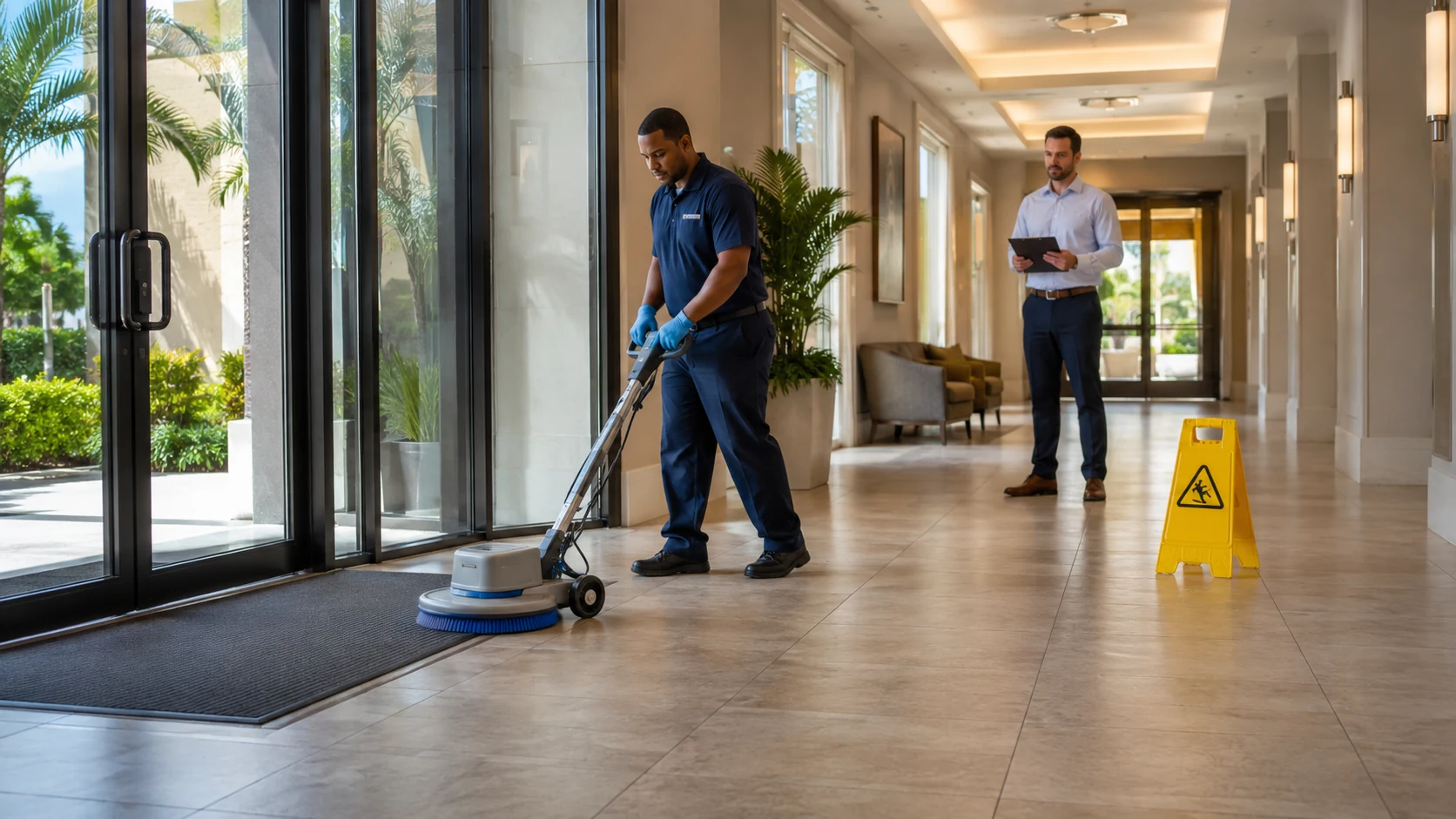
Entry mats are part of this discussion because they collect soil before it spreads into the building. The plan should identify who provides them, how they are positioned, when they are cleaned and when a saturated or damaged mat must be reported. The scope should also address the floor immediately beyond the mat, where tracked-in moisture and soil can accumulate.
Plan access, drying time and wet-floor controls
Cleaning cannot be planned separately from building access. The scope should identify service windows, restricted areas, alarm or key procedures, occupied routes and any zones that cannot be closed at the same time.
OSHA requires employers to keep workplace walking-working surfaces clean, orderly and, to the extent feasible, dry, and to correct or guard hazardous conditions. A practical cleaning plan therefore documents how wet areas are marked, how access is managed while a floor dries and how spills or hazards are reported. This is an operational planning point, not a promise that routine cleaning can repair damaged flooring.
For an occupied property, day porter services may be worth considering when entrances, lobbies, restrooms or common areas need attention during business hours. The walkthrough should still define which daytime tasks are approved and which requests must go through the designated property contact.
Make responsibilities visible in the written scope
Before service begins, the plan should identify who is responsible for:
- moving or protecting items that block approved floor areas;
- providing or replacing entrance mats;
- reporting leaks, damaged surfaces or recurring moisture;
- supplying consumables or specialty products when applicable;
- authorizing periodic work, additional areas or schedule changes;
- confirming when treated areas can return to normal use.
For managed properties, requests from tenants or individual occupants should follow the authorization process established by property management. That protects the approved scope and keeps changes to areas, frequency, access or timing documented.
Inspect conditions, not just completed tasks
A useful inspection looks at the result in context. It should distinguish between a missed cleaning task, a recurring source of soil, a surface that needs a different approved method and damage that falls outside cleaning.
The plan can define a short inspection path through entrances, main traffic lanes, corners and edges, elevator approaches, restrooms and representative occupied areas. Issue reporting should state what was observed, where it occurred, when it was reported and what follow-up was authorized. Photos or logs may be used when the property requires them and the process has been agreed in advance.
Questions to answer during the walkthrough
For commercial cleaning in Fort Lauderdale or elsewhere in Broward County, bring the information that changes the plan:
- Which buildings, floors and zones are included?
- What surface materials are present?
- Where do traffic, deliveries and weather create the most soil?
- What work is expected every visit, weekly or periodically?
- Which areas have restricted access or fixed operating windows?
- Who controls entry mats, supplies and movable furnishings?
- Who can approve extra work or a change in frequency?
- How will missed tasks, spills and floor-condition concerns be reported?
The result should be a written scope that a property manager can review before comparing price. Square footage matters, but so do surface type, traffic, access, service window and the difference between routine and separately approved work.
Build a floor care scope around the property
Osorio Cleaning & Maintenance Services can review approved floor areas as part of a commercial cleaning walkthrough for offices, managed properties and other commercial facilities in Fort Lauderdale and Broward County. The next step is to identify the property, operating hours, access requirements, priority areas and the floor-care tasks that should be included in the written scope.
Request a walkthrough to discuss a recurring cleaning plan for your property.
Frequently asked questions
What is a commercial floor care plan?
A commercial floor care plan is a written part of the cleaning scope that identifies approved floor areas, surface types, routine and periodic tasks, frequency, service windows, access controls, drying considerations, inspection points and responsibility for changes.
How often should commercial floors be cleaned?
Frequency should be based on the surface, foot traffic, operating hours, weather exposure and the way each zone is used. Entrances and main corridors may need more attention than low-traffic offices, so the walkthrough should set frequency by area rather than apply one schedule everywhere.
What is the difference between routine and periodic floor care?
Routine care covers the approved tasks performed on a recurring schedule, such as sweeping, vacuuming, damp cleaning, spot attention and mat-area care. Periodic care is separately scheduled work appropriate to a confirmed surface and should be clearly included or excluded in the proposal.
Should entrance mats be included in the plan?
Yes. The plan should state who provides the mats, where they are placed, how they are cleaned and how saturated or damaged mats are reported. It should also cover the floor immediately beyond each mat, where tracked-in moisture and soil often collect.
Can floor care be scheduled around business hours?
Yes, when the property and cleaning provider agree on workable access. The scope should identify occupied routes, restricted areas, drying time and which zones can be cleaned before opening, after closing or during approved daytime windows.
How should wet-floor signage and drying time be handled?
The written plan should describe how wet areas are marked, how people are routed while a floor dries and who is notified if a spill or hazardous condition cannot be corrected immediately. The exact controls should match the property and applicable safety responsibilities.
Does recurring janitorial service include every type of floor treatment?
Not automatically. The proposal should state which routine tasks are included and identify any periodic, specialty or restorative work that needs separate approval. The appropriate method also depends on the confirmed floor material and condition.
Who should authorize changes to the floor care scope?
The property should designate a management contact who can approve changes to areas, tasks, frequency, access or timing. Requests that affect price or contract terms should follow the company’s internal approval process before work changes.
How does a floor care plan work for condominiums and HOAs?
The plan should distinguish common areas from private units, identify member- and visitor-facing traffic zones, document access to amenities and service areas, and state how management or the board authorizes additional work. Private areas should be included only when expressly approved.
What information is needed for a floor care quote?
Provide the property type, approximate size, floor materials, operating hours, access requirements, traffic patterns, existing concerns and the areas and tasks you want included. A walkthrough can then confirm the scope before pricing.
Sources
- OSHA 29 CFR 1910.22, Walking-Working Surfaces: https://www.osha.gov/laws-regs/regulations/standardnumber/1910/1910.22
- ISSA, high-traffic floor care planning: https://events.issa.com/events/around-the-clock-floor-care/