An office breakroom is a shared workplace area, but the cleaning company, staff and management do not automatically own the same responsibilities. A clear scope should distinguish routine cleaning, employee-use expectations, consumables and situations that need to be reported rather than guessed.
Define the approved breakroom area
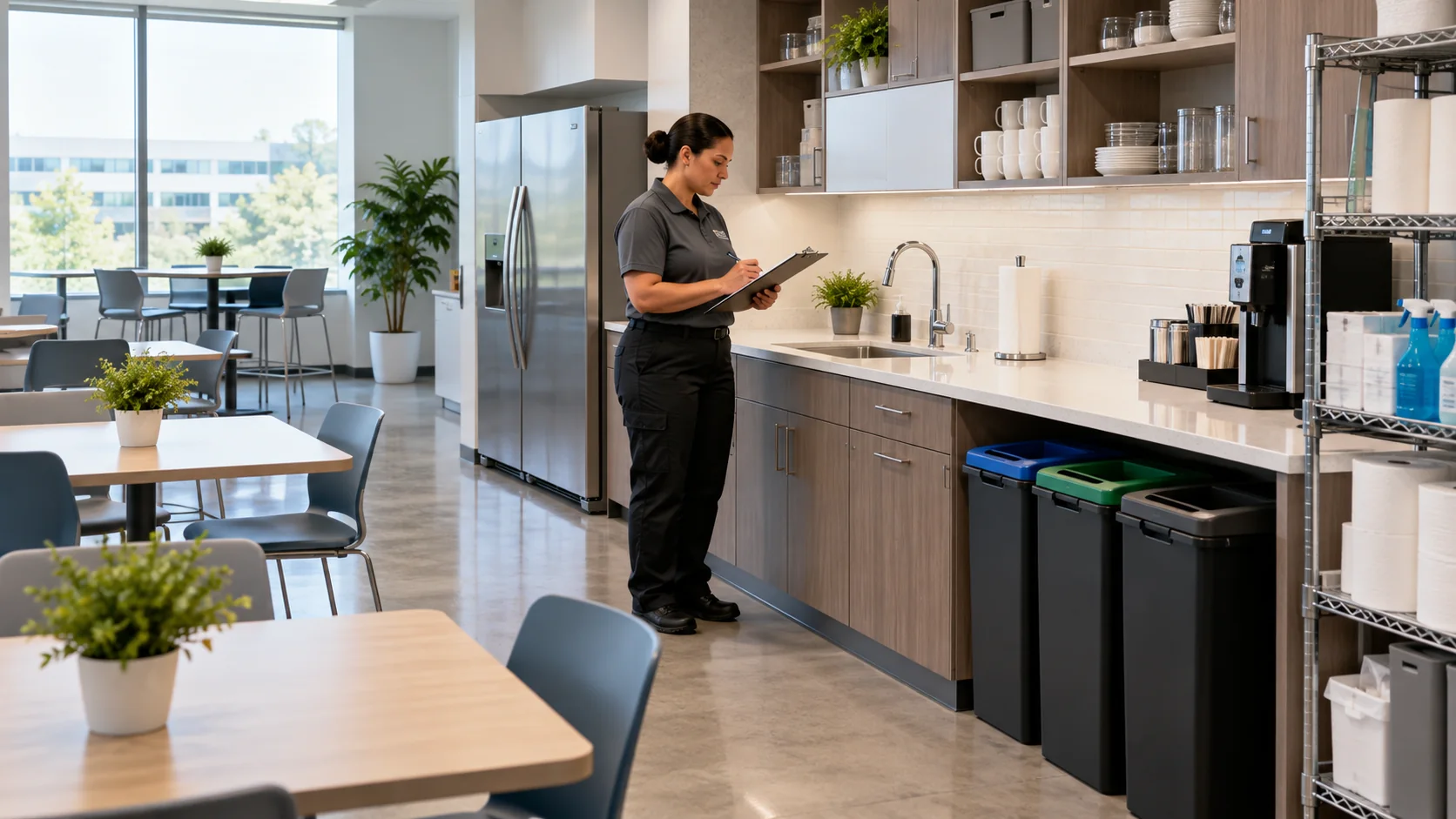
The walkthrough should identify which room, counters, sinks, floors, tables, waste stations and accessible exterior appliance surfaces are included. Interior appliance cleaning, personal food items, cabinets or specialty tasks should be listed separately if they are approved. The goal is to make the boundary visible before service starts.
For a broader allocation of workplace duties, see office cleaning responsibilities. Buyers comparing recurring service can review office cleaning services.
Routine janitorial tasks should be specific
- Remove trash and recycling from approved containers
- Clean approved tables, counters and accessible sink areas
- Clean accessible exterior surfaces listed in the scope
- Sweep, vacuum or damp-clean floors according to the material
- Report leaks, damaged fixtures, pests or unusual conditions
The cleaning team should not be expected to decide whether unlabelled personal items, food containers or equipment can be discarded. Management should establish a workplace policy for those items.
Staff responsibilities reduce avoidable conflict
Employees should handle personal dishes, food and belongings according to the property’s policy. Spills that create an immediate hazard should be addressed or reported promptly rather than left until the next scheduled visit. The cleaning scope can support the shared space, but it does not replace internal workplace rules.
Consumables need an owner
Paper goods, hand soap, liners and other approved replenishment items should have a documented supply responsibility. If the cleaning provider restocks property-supplied items, the scope should say so. If purchasing or delivery is arranged separately, that should also be clear. Low-stock reporting can help management act before supplies run out.
Example planning matrix
This is an example for discussion during a walkthrough, not a universal service promise. The final matrix must reflect the approved property scope.
| Surface or item | Example task | Example timing | Responsibility to confirm |
|---|---|---|---|
| Tables and counters | Clean approved accessible surfaces after personal items are removed | Each approved visit | Staff clears food, dishes and personal property |
| Sink area | Clean accessible sink, counter and fixture surfaces | Each approved visit | Management reports leaks or repair needs |
| Appliances | Clean only the listed exterior surfaces | Approved routine or periodic interval | Interior cleaning and food removal require separate authorization |
| Floor | Sweep, vacuum or damp-clean using the method approved for the material | Based on use and service schedule | Staff reports immediate spills before the next visit |
| Consumables | Restock property-supplied items when included | During approved visits | Scope names purchaser, storage point and low-stock contact |
Food preparation and personal items need a workplace rule
Cleaning staff should not decide whether unlabelled food, dishes, medicine, reusable containers or personal appliances can be discarded or moved. Management should establish when employees must remove items, how refrigerator cleanouts are announced, and who authorizes disposal. If a scheduled interior appliance service is approved, the property should confirm that the area is cleared before the cleaning window.
Operational mistakes to avoid
- Assuming interior appliance cleaning is included because exterior surfaces are listed
- Leaving personal dishes or food on surfaces scheduled for cleaning
- Restocking products without defining who purchases and stores them
- Waiting for the next visit to report a spill, leak or unsafe condition
- Giving informal scope changes directly to individual cleaners instead of the designated contact
Frequency should follow actual use
A lightly used office breakroom may not need the same schedule as a shared room serving multiple shifts. Occupancy, meal periods, waste volume, floor conditions and operating hours should guide the plan. The office cleaning frequency guide explains how those factors affect recurring service.
Report issues with location and condition
A useful issue report identifies the room, surface or fixture, what was observed and whether immediate action is needed. Cleaning teams can report a leaking sink or damaged dispenser, but repairs and property decisions remain with the authorized contact unless another service is expressly approved.
For Tamarac facilities, see our commercial cleaning service in Tamarac.
Clarify your office cleaning responsibilities
Osorio Cleaning & Maintenance Services prepares recurring scopes for offices and commercial properties in Tamarac, Fort Lauderdale and other Broward County service areas. A walkthrough can define the breakroom tasks, frequency and supply responsibilities that fit your workplace.
Office breakroom cleaning FAQs
What does office breakroom cleaning usually include?
The approved scope may include trash removal, accessible tables and counters, sink-area cleaning, listed exterior appliance surfaces and floor care. The exact areas and tasks should be written into the proposal.
Does the cleaning company wash employee dishes?
Employee dishes should be handled under the workplace’s internal policy unless dishwashing is expressly included in the approved scope. It should not be assumed.
Is the inside of the refrigerator included?
Only when interior refrigerator cleaning is specifically approved and management has a process for food removal. Routine exterior cleaning does not automatically include the interior.
Who supplies paper goods and soap?
The property and provider should document who purchases, stores and restocks each consumable. If the cleaning team reports low inventory, that responsibility should also appear in the scope.
How often should an office breakroom be cleaned?
Frequency depends on occupancy, meal periods, waste volume, operating hours and the condition expected by management. Shared or multi-shift rooms may need more frequent attention.
What happens when the cleaning team finds a leak or damaged fixture?
The team should report the location and observed condition to the designated contact. Repair work is not implied unless it is separately authorized.
Can staff request extra breakroom cleaning directly?
Changes should go through the designated management contact so scope, timing and any price effect can be confirmed before additional work begins.