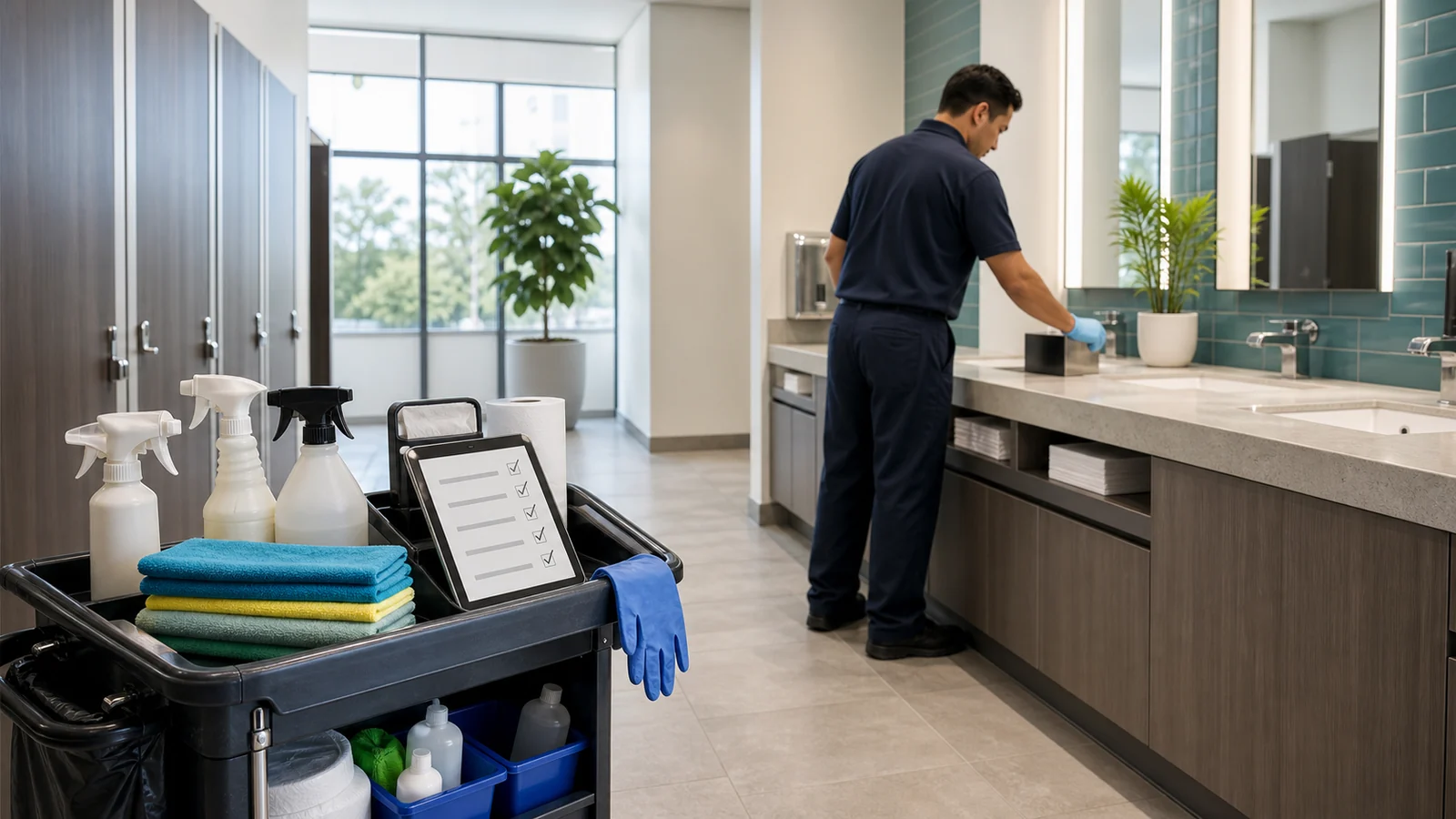
A useful commercial restroom cleaning checklist does more than list tasks. It tells the cleaning team what to check, what to clean or restock, what to document, and which conditions need to be reported to the facility contact.
For offices, managed buildings, condominiums, HOAs, schools, medical facilities, retail properties and other commercial sites, restroom needs change with traffic, operating hours, layout and the approved scope. The checklist should reflect those conditions instead of applying one fixed schedule to every property.
Osorio Cleaning & Maintenance Services can incorporate restroom care into recurring janitorial services when those areas and responsibilities are included in the written scope.
What a commercial restroom checklist should accomplish
The checklist should make the approved scope easy to follow during service and easy to review afterward. It should distinguish four kinds of activity:
- Routine cleaning: soil removal from approved fixtures, surfaces and floors.
- Condition checks: looking for visible soil, wet areas, odor, empty dispensers or other conditions named in the scope.
- Supply checks: confirming whether approved paper products, soap or liners need attention and who provides them.
- Issue reporting: documenting conditions that cleaning alone cannot resolve or that require authorization.
A generic list can be a starting point, but the final version should be based on a walkthrough of the property.
Restroom areas and tasks to define
Use the following table to decide what belongs in the written scope. It is a planning guide, not a promise that every task is included automatically.
| Area | Define in the approved scope | Record when useful |
|---|---|---|
| Entrances and doors | Handles, push plates, partitions and visible marks on approved surfaces | Damage, repeated soil or access concerns |
| Sinks and counters | Soil removal, product use, faucets, counters and splash areas | Leaks, slow drains or damaged fixtures for the facility contact |
| Toilets and urinals | Cleaning and disinfection of approved fixture surfaces and surrounding areas | Blockages, leaks or out-of-service conditions |
| Dispensers and supplies | Soap, paper products, liners and who supplies or restocks each item | Low stock, empty dispensers or damaged hardware |
| Mirrors and partitions | Smudges, spots, dust and approved detail work | Scratches, graffiti or damage requiring follow-up |
| Floors and edges | Dry debris, wet cleaning method, corners, edges and warning-sign procedure | Wet areas, recurring soil, damaged flooring or slip concerns |
| Waste containers | Liner replacement, waste removal and approved container care | Overflow, unusual waste or recurring capacity issues |
| Final condition | Visual check, odor check, supplies and safe access before reopening | Time completed, initials and unresolved issues |
The property should also identify tasks that require separate authorization, specialized service or maintenance support. That keeps the cleaning checklist focused and prevents assumptions.
Build the checklist around the property
Identify each restroom and service window
List the restrooms covered by the agreement and when the cleaning team may access them. A single-tenant office may have a different service window from a lobby restroom, clubhouse, medical office or multi-tenant building.
If a restroom remains open while the property is occupied, the plan should address how the area is checked and how temporary restrictions or wet-floor signage are handled.
Separate full cleaning from daytime condition checks
A full scheduled cleaning and a brief occupied-hours check are not the same service. A daytime check may focus on visible conditions, supplies, waste and issue reporting, while the scheduled visit covers the complete approved task list.
When a property needs occupied-hours attention, day porter services can be evaluated separately from evening or overnight janitorial work. The scope should state which tasks belong to each service window.
Assign supply responsibilities
The checklist should name who provides paper products, soap, liners and any property-specific consumables. It should also explain where approved supplies are stored and who should be notified when stock reaches the agreed reorder point.
This avoids a common gap: the cleaning task may be complete, but the restroom still feels unprepared because a dispenser is empty or the replacement stock is unavailable.
Match products and methods to approved surfaces
Countertops, fixtures, partitions and floors may require different products or contact methods. During the walkthrough, document material sensitivities, approved products and any areas that should not be treated with a standard restroom process.
The checklist should describe the result to verify—such as a clean sink area or a dry, safely reopened floor—without encouraging the team to improvise on an unfamiliar surface.
Define inspection and issue reporting
The log should separate completed cleaning from conditions that need management attention. A cleaner can report a leak, blocked fixture, broken dispenser or damaged surface, but repair or replacement should not be assumed to be part of the cleaning scope.
For a broader approach to documented service quality, use the commercial cleaning quality inspection checklist alongside this restroom-specific plan.
Review the checklist after service begins
Traffic patterns can change. A property may need different check times on busy days, during events, after schedule changes or when one restroom receives substantially more use than another.
Review the log for repeated shortages, recurring soil, missed access windows and unresolved facility issues. Adjust the approved scope only when the evidence shows a clear need.
What to include in a restroom cleaning log
A concise log is easier to use than a long form that no one reviews. Consider these fields:
- Date and service window
- Restroom or area identifier
- Time checked or completed
- Tasks or conditions reviewed
- Supply status
- Issue observed
- Action taken within the approved scope
- Follow-up needed and responsible contact
- Initials or other approved verification
Do not use the log to record unnecessary personal information about occupants. It is a service and condition record, not a visitor record.
How often should commercial restrooms be checked?
There is no single frequency that fits every property. The decision should account for:
- Number of occupants and visitors
- Hours of operation
- Peak traffic periods
- Events or shared public access
- Number and location of restrooms
- Supply capacity
- Previous condition and issue reports
- Whether daytime support is included
For example, an office cleaning service may combine scheduled restroom cleaning with a different daytime check plan than a busy shared lobby. The walkthrough should establish the initial frequency, and the service log should show whether it remains appropriate.
A practical quality review
Supervisors and facility contacts do not need to repeat the entire cleaning process to review it. A practical inspection can verify:
- Approved fixtures and touchpoints were addressed
- Floors and entrances are safe for use
- Waste and supplies match the documented responsibility
- No visible task from the scope was skipped
- Reported maintenance or access issues reached the correct contact
- The service log is complete enough to support follow-up
If one issue repeats, first determine whether the task, frequency, access, supply responsibility or reporting path is unclear. Changing the checklist may be more useful than adding unrelated tasks.
Commercial restroom planning for Broward properties
Fort Lauderdale and Broward County properties include professional offices, managed buildings, condominium and HOA common areas, schools, medical facilities, retail spaces and other sites with different traffic and access patterns. A useful checklist should reflect the actual property rather than force every facility into the same routine.
Osorio also serves confirmed areas in Miami-Dade County when the requested scope and schedule are a fit. Coverage does not change the planning principle: inspect the property, define the approved restrooms and responsibilities, and document how service will be reviewed.
Answer-first FAQ
Frequently asked questions
What should be on a commercial restroom cleaning checklist?
Include the approved fixtures and surfaces, cleaning and disinfection tasks, floor care, waste removal, supply responsibilities, condition checks, service times, issue-reporting steps and verification method. The final checklist should be based on the property walkthrough and written scope.
How often should a commercial restroom be checked?
Set the frequency from traffic, operating hours, restroom capacity, events, supply use and the level of daytime support included. A low-traffic office and a shared public restroom should not automatically follow the same schedule.
Should the checklist include paper and soap restocking?
Yes, when restocking is part of the approved scope. The checklist should identify which supplies are checked, who provides them, where replacements are stored and who receives low-stock reports.
What should a restroom cleaning log record?
Record the date, area, service time, tasks or conditions reviewed, supply status, issues observed, action taken and any follow-up needed. Keep the log concise enough for the cleaning team and facility contact to use consistently.
Who should review the completed checklist?
The written plan should identify the cleaning supervisor or designated facility contact responsible for reviewing logs and unresolved issues. The reviewer should be able to compare the record with the approved scope.
Are daytime restroom checks the same as a full cleaning?
Not necessarily. A daytime check may focus on visible conditions, waste, supplies and urgent reporting, while a scheduled cleaning covers the complete approved task list. The agreement should distinguish both service windows.
How should leaks or broken dispensers be handled?
The cleaner should follow the agreed reporting process, document the condition and notify the designated contact. Repair or replacement should not be assumed to be included unless it is specifically authorized.
Should every restroom use the same checklist?
Only when the layouts, fixtures, traffic and responsibilities are genuinely the same. Otherwise, use a shared core checklist with area-specific instructions for each restroom or restroom group.
Can a checklist support offices, condominiums and managed properties?
Yes. The same planning framework can support different property types, but the final tasks, access windows, supply responsibilities and inspection expectations should be customized to the approved facility scope.
What should I prepare for a restroom-cleaning walkthrough?
Prepare the restroom locations, operating hours, traffic patterns, access rules, known surface sensitivities, supply responsibilities, current concerns and the person authorized to approve the scope. This helps the provider build a clearer checklist and proposal.
Turn the checklist into a clear cleaning scope
A restroom checklist is most useful when it matches the facility, service window and management process. Osorio can review the approved areas, traffic, supplies, access requirements and reporting expectations before preparing a written scope.